

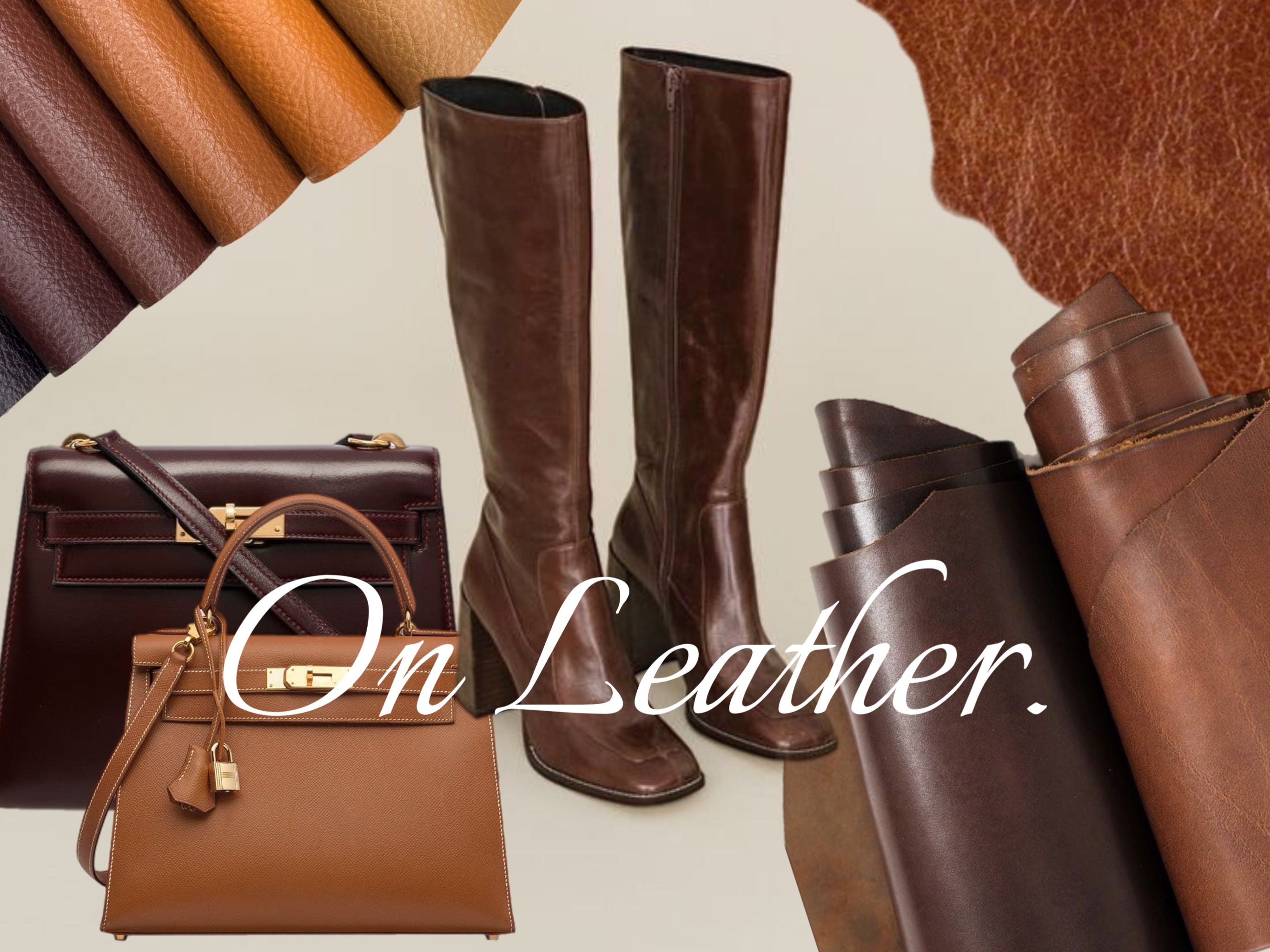
On Leather.
The Art of Shopping for Quality Leather: A Personal Guide to Choosing the Right Hide.

Hello darling,
Well, let me just warn you right off the bat: this won’t be a quick scroll-and-go situation. No, my dear reader, you’re in for a bit of a marathon. A delightful one, I assure you, but long nonetheless. Think of it as a ‘flâner’ through the gardens of a grand estate.
So, take your time and you might discover some interesting titbits about the wondrous world of leathers.
Grab a cup of tea or coffee and let’s settle in.
Leather. There’s something about it, right? Whether it’s the soft touch of a well-worn jacket, the timeless elegance of a classic handbag, or the scent of those brand-new boots you’ve been eyeing for weeks, leather just gets you. But let’s be honest, shopping for leather can feel a little daunting. There are so many types and finishes, that it’s easy to get lost in the details.
Sometimes you wish you had a leather-savvy friend who could just guide you through it all, perhaps? Well, here I am. Consider me that friend. No jargon, no pretentious talk, just the essentials. Let’s make sure you’re not wasting your time or your money on leather that doesn’t deserve a place in your wardrobe.
So, if you’ve ever found yourself wondering, “What makes this leather worth the price?” Here’s my personal guide to shopping for quality leather. Just a few tips to help you feel confident in choosing leather that’s not only beautiful but made to last.
Why Quality Leather Matters
We all know the feeling of finding that perfect piece, whether it’s a jacket that fits just right or a bag that you just can’t live without. But what makes leather feel so good isn’t just how it looks — it’s how it feels. High-quality leather has a softness that you can’t quite explain. It’s smooth, durable, and actually gets better with time. I mean, who doesn’t love the idea of a piece of clothing or accessory that ages like fine wine? With quality leather, that’s exactly what happens. It molds to your life, developing a unique character that only you and it will share.
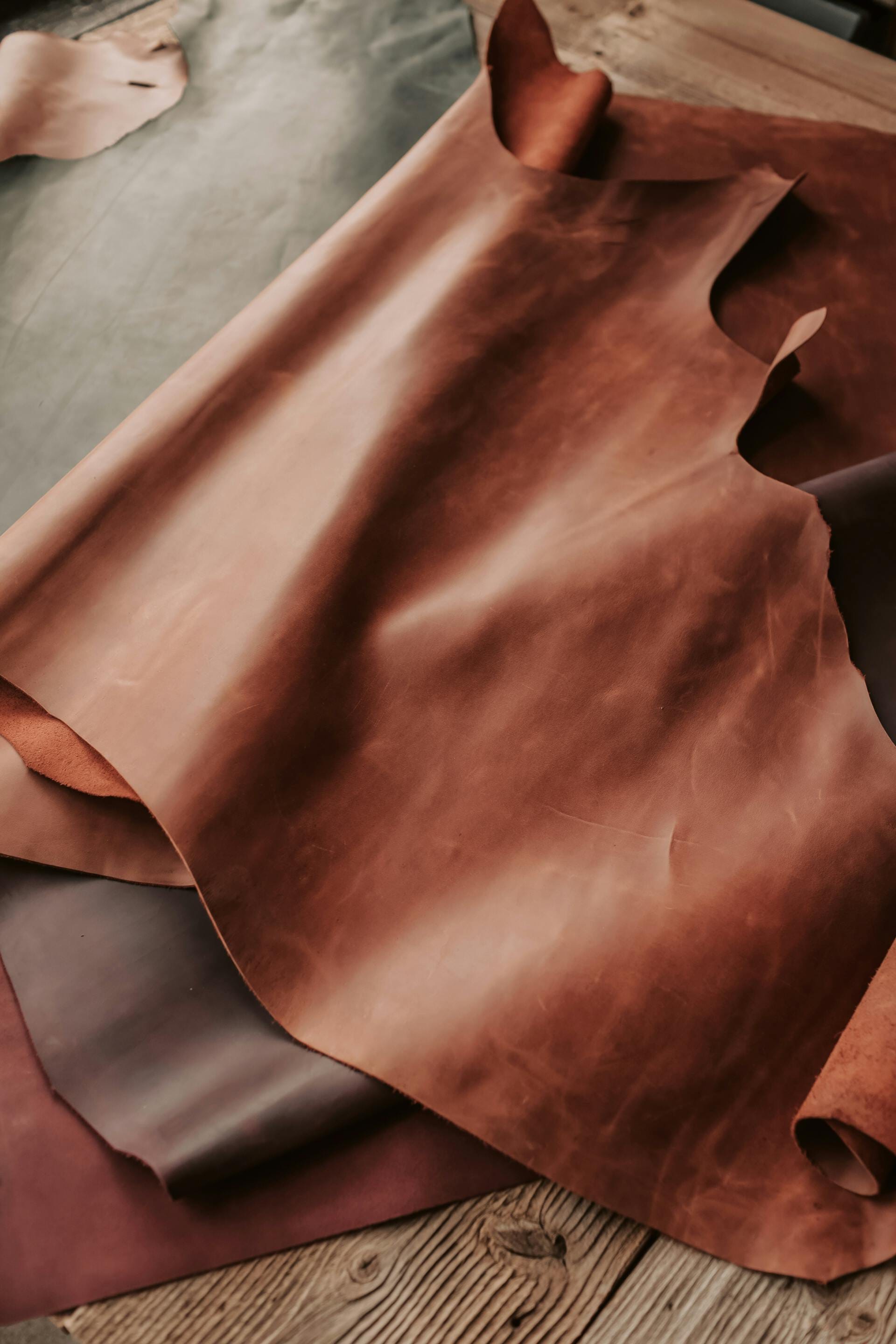
The Different Types of Leather
Alright, let’s talk options. Leather comes in all sorts of varieties and knowing the difference will help you choose the right one for your style (and your budget).
Full-Grain Leather1
Let’s kick things off with the best of the best. Made from the top layer of the hide, it retains all its natural texture and imperfections, making it incredibly durable and visually stunning. Over time, full-grain leather develops a beautiful patina2, meaning your jacket or bag will only get better with age. If you’re splurging, this is the leather you want.Top-Grain Leather3
Okay, so full-grain sounds amazing, but what if you’re looking for quality but not quite ready to drop that much cash? Enter top-grain leather is still high-quality, but it’s been sanded to remove imperfections (which gives it a more even texture). It’s a little more polished and less likely to develop that signature patina, but still a great option for bags or wallets that will hold up over time.Genuine Leather
Now, here’s where things can get a little confusing. “Genuine leather” is a term you’ll often see, but don’t be fooled. While it’s still made from leather, it’s typically processed heavily, meaning it’s not as durable or luxurious. It’s okay as a budget-friendly option but don’t expect it to last forever.Suede and Nubuck
If you’re all about texture, suede and nubuck will have you hooked. These leathers are treated to create a soft, velvety surface, and they’re perfect for shoes, jackets, or bags with a bit of a vintage vibe. Suede comes from the underside of the hide, while nubuck is from the top layer but brushed for that rich, velvety feel. They’re a little more delicate, though, so you’ll want to take extra care to protect them from rain or stains. But the payoff? Totally worth it.Bonded Leather
And then there’s bonded leather, which is basically leather scraps glued together. It’s cheaper, but honestly, it’s not something I’d recommend if you’re looking for something that will last a while. It’s often used for furniture or budget accessories, so while it looks nice, it won’t give you that same luxurious feel or quality.Vegan and Faux Leather4
Luxury products might still use terms like vegan or faux leather but both mean the material isn’t leather, rather something that looks like leather. In a few circumstances it could refer to cactus-, mushroom-, cork- or other leather alternatives. But if it isn’t specified, you can assume it’s plastic made to look like leather, which isn’t as eco-friendly nor qualitative. Most often the term is used to sell polyurethane or polyvinyl chloride products that have been manufactured to mimic the look of leather but not the quality.
As a general rule, in a quality product, either full-grain or top-grain, suede or nubuck, is used. While bonded leather and genuine leather are avoided at all cost for quality.
If the leather type isn’t specified at all, sometimes it will say ‘luxury leather’ or ‘high-quality leather’, whatever that might mean. This isn’t necessarily a red flag but you might want to ask what type of leather it is and whether the grain has been removed.
Other Leather Variations
The other variations in leather come from the cut of the hide and the animal the leather comes from. The belly is generally more stretchy while the shoulder is more sturdy. This isn’t normally specified while buying a product, so I will not go into it here.
Lastly, the animal the leather comes from also plays a part in the quality and look of it. Generally different animal hides are used for different surface textures. Some leathers are made from the hides of exotic animals5. Examples of such exotic leather include elephant, crocodile and snake leather.
Cow and calf leather are most often seen on the market, with calf leather mostly being thinner than cow leather. Sheepskin, goatskin, and pigskin are also common as they are all byproducts6 (also called coproducts7) of the meat industry. Also buffalo, bison and deer leathers can be found in many leather goods.
The Effect of Tanning Leather
Tanning is what turns the hide into leather. There are different processes and different ways of tanning.
Vegetable-tanned leather
This leather is tanned using the tannins in vegetative matter, such as tree bark. It tends to be more stiff, durable, and it takes dye really well. Vegetable tanned leather is especially great for bags but not as great for clothing.
Chrome-tanned leather8
Tanned with chromium salts which turns the leather into a very flowy fabric, making it soft and flexible. Chrome-tanned tends to be more ideal for garments rather than bags.
Oil tanned leather
This is actually chrome tanned leather which is then packed with oil or wax. The process really brings out the natural imperfections of the leather giving it a rugged look. It also makes the leather waterproof.
Other forms of tanning include Alum-tanned leather, which uses aluminum salt, among a few others which aren’t typically seen modernly anymore.
My go-to leather is vegetable tanned for its quality, although chrome tanned leather tends to be more common in the market. This is because chrome tanned leather is cheaper to produce.
The Finishing Touch
After the leather has been tanned, sometimes it is treated with a final process which we refer to as the finish. The finish of the leather also plays a part into how you ought to take care of your products.
A natural finish means that the leather is left as-is, meaning it looks just like leather but isn’t protected in any way. It means you, as the consumer, have to treat your leather so it stays looking good.
Finished leather has a clear coat or a transparent dye put on it. This results in a product that can take more wear and tear, and requires less upkeep. Often this finish is plastic, which tends to cheapen the look of the leather. A good balance of the two is a hallmark of a good leather product.
Embossed leather has had an image or design stamped into it.
A thinner, natural finish usually is preferred if you like the look of leather. It tends to hold up better over time while some finishes can start to peel or get scuffed with age.

How to Spot the Good Quality Products
You’re now in the store, or maybe you’ve found a perfect piece online. But how do you know if the leather is the one? Here’s how to tell:
Touch it for texture and finish
Quality leather feels smooth and supple to the touch. Run your fingers over it. If it feels soft and luxurious, you're on the right track. No areas should feel too rough or coarse. Whether it’s polished, matte, or distressed, the finish should be consistent throughout the item.
The Smell Test
This sounds strange perhaps, but trust me. Leather has this distinct, earthy scent that synthetic materials just can’t replicate. A genuine, high-quality leather item will have a natural, organic smell that’s deep and rich. On the other hand, low-quality leather — particularly that made from bonded or synthetic materials — may have a chemical, plasticky odour, often accompanied by a sharp artificial scent. Leather isn’t supposed to smell off-putting. If it smells like plastic or chemicals, walk away.
Edges matter
If the leather has unfinished edges, then the construction is sloppy, as unfinished edges can fray and thus will not last over time. However, fake or lower-quality leather tends to have almost artificial-looking edges, often plastic. Look for burnished edges9 if you can find them.
Craftsmanship
Leather goods are only as good as the hands that make them. The stitching, hardware, and overall construction all play a significant role in determining whether a leather item is truly premium. Well-constructed leather pieces will feature fine, even stitching with no visible knots or loose threads. The stitching should be tight, uniform, and resilient, ensuring that the leather doesn’t weaken or tear over time.
Caring for Your Leather
Alright, so you’ve found your leather treasure. Now, let’s keep it looking gorgeous. A little maintenance goes a long way:
Condition it10
Leather, like us, needs moisture. If you use your leather goods often enough, the oils from your hands will help keep the leather moisturised. If not, you most likely need to upkeep your leather goods in some way. Especially, natural vegetable-tanned leather can start to crack if exposed to too much sunlight or heat. You likely need to use some oil or wax products, such as a leather conditioner, once in a while to keep it from drying out.
Protect it from water
Leather and water are not friends. If your leather gets wet, gently blot it dry with a soft cloth and let it air dry. Don’t use any heat and avoid excessive exposure to the sun to prevent the leather from drying out.
Store it right
Leather needs to breathe, so store it in a cool, dry place. Don’t hang your leather jackets on wire hangers, they’ll ruin the shape. Use padded hangers for jackets and store bags upright to help them maintain their structure.
To clean leather, just wipe gently with a soft, damp cloth. Avoid harsh chemicals at all costs. Always look at the product’s care label if you are unsure!
My Final Word on Leather Shopping
Here’s the thing: leather shopping is personal. It’s about finding something that speaks to you, something that you like, that feels like it was made just for you. Don’t rush it. Take your time to examine the leather, and see if it is a product you admire.
So go ahead, splurge on that classic leather jacket or finally treat yourself to the bag you’ve been eyeing. Quality leather is worth every penny. Happy shopping!
Warmly,
— A Friend in Silk
Full-Grain Leather might also be called regular grain.
Patina is the look leather develops over time. Depending on the conditions the leather is exposed to, it will darken, soften and become glossier with time. It is mainly a quality inherent to high quality leather — so vegetable-tanned and full-grain, especially when it isn’t heavily finished — but also tells the story of the leather’s life. It’s a desirable trait searched for by many people when it comes to leather goods.
Top-Grain Leather might also be called corrected grain.
Vegan or Faux Leather might also be called synthetic leather.
Exotic leathers are banned in some countries to protect endangered species from being hunted for their skins. Which exotic leathers are considered illegal depends on the country. Watch out, this might mean it’s illegal to import exotic leathers into a country. Be sure to buy exotic leathers from reputable sources, and have the proper documentation proving it’s not from an endangered species.
Claims of leather being a byproduct of the meat industry are somewhat misleading, as almost all leather comes from the meat industry. About 99% of all leather is a byproduct of the food industry, from what i’ve read, with the other 1% coming from exotic leathers. If this by-product leather isn’t used, it can thus only be discarded, so buying it doesn’t directly contribute to the meat industry, if that is something you are concerned about.
Leather as a coproduct of the meat industry is something especially Animal Rights activists label it as. Leather products are quite a large and profitable industry, therefore it is argued that leather isn’t a byproduct but a coproduct. Cattle are raised with the idea of being able to sell the meat, milk, and leather. Both terms — byproduct and coproduct — are used to described leather as opinions on the matter differ.
Chrome tanning, in the past, could lead to harmful chemicals ending up in the leather. Many people still avoid it for that reason, although most countries have very strict rules in place to prevent too high concentrations of it in leather. Chrome-tanned leather is almost impossible to avoid because it is the most common leather in the market at the moment.
Burnished edges are created when you wet a raw leather edge and apply friction to smooth and compact fibres. This prevents fraying and gives it a professional, quality appearance.
Beware, Conditioning leather might darken the colour.